
- Health Conditions A-Z
- Health & Wellness
- Nutrition
- Fitness
- Health News
- Ayurveda
- Videos
- Medicine A-Z
- Parenting
TV Anchor Dermot Murnaghan Shares Health Update On Stage 4 Cancer Battle, Urges Men To Get Tested Sooner
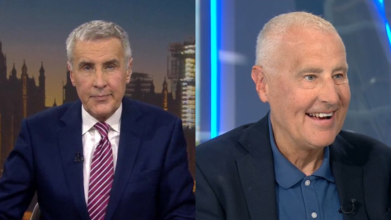
Credits: Skynews Media
When veteran broadcaster Dermot Murnaghan revealed he had been diagnosed with stage 4 prostate cancer, the news came as a shock to viewers who had long trusted him to deliver the headlines. Now, at 67, the former Sky News anchor is speaking candidly about his health battle—and his urgent plea is resonating far beyond the UK. His story is not just about one man’s fight with cancer; it highlights the larger problem of underdiagnosis and the lack of routine prostate screening programs, even in advanced health systems.
Murnaghan describes his diagnosis as a “bolt from the blue.” While on holiday, he suddenly fell ill and returned home for urgent treatment. What followed was a devastating revelation: advanced prostate cancer that had already spread. What makes his story even more striking is that he had not experienced the common warning signs.
Also Read: FDA Approves New COVID-19 Vaccines In US With Restricted Access, Check Eligibility And Other Rules
Typical prostate cancer symptoms can include difficulty urinating, blood in urine, erectile dysfunction, or persistent lower back pain. Murnaghan, however, showed none of these red flags. His experience underscores what health experts have warned for years—prostate cancer can develop silently, only revealing itself when it has already reached advanced stages.
Since his diagnosis, Murnaghan has undergone chemotherapy, completing his rounds earlier this summer. He describes the treatment as both grueling and strangely reassuring. “It’s hard, but you feel you are actively doing something, in the hands of wonderful medical professionals,” he told Sky News. Yet, once chemotherapy ended, he admitted to a psychological gap. “Now it’s the waiting-and-seeing phase. We’re just hoping to see how much has been achieved.”
This waiting game is one familiar to many cancer patients. The treatment may stop, but the uncertainty lingers. Still, Murnaghan says he is “feeling pretty good,” a sign of cautious optimism as he continues monitoring his progress with doctors.
What Is Dermot Murnaghan’s Plea For Men?
If there’s one message Murnaghan is determined to share, it’s this: men cannot afford to be passive about their health. In his candid interviews, he admitted to delaying screening, despite years of reporting on health issues as a journalist. “I foolishly sat in that chair for many years, telling men over 50 to get tested. And when it came to myself, I kept putting it off. Life gets in the way—work, family, holidays. But cancer doesn’t wait.”
The broadcaster urges men, particularly those over 50 or with a family history of prostate cancer, to be proactive. “Go and demand it,” he insists, stressing that in the UK and many other countries, prostate testing is not automatically offered. Unlike breast cancer or bowel cancer, where routine screenings are built into public health systems, prostate cancer relies heavily on individual initiative.
Can PSA Testing Save Lives?
At the center of the discussion is the prostate-specific antigen (PSA) test. This blood test measures the levels of a protein produced by the prostate. High PSA levels may indicate prostate cancer, though not always—it can also signal other prostate conditions.
Critics argue that PSA testing risks over-diagnosis, identifying cancers that may never cause harm. But Murnaghan and many advocates believe the benefits outweigh the risks, especially when weighed against the devastating impact of late-stage cancer. “They might cost more money, but think about the money you save in the long run,” he argued. His call echoes ongoing debates in medical communities worldwide, where the lack of consensus on prostate screening continues to leave many men vulnerable.
Murnaghan’s case also shines a light on broader health system shortcomings. Cancer Research UK acknowledges that there is no reliable national screening program for prostate cancer. As a result, thousands of men “fall through the gaps,” much like Murnaghan himself did.
This concern is echoed by One Cancer Voice, a coalition of more than 60 cancer charities. The group is pressuring the UK government to prioritize earlier diagnosis and prevention strategies. Their message is clear: without structured screening programs, too many cancers will continue to be caught at advanced stages, where treatment is more invasive, costly, and often less effective.
Despite his ongoing treatment, Murnaghan is not stepping away from the spotlight. He continues to host shows, including the true crime documentary series Killer Britain and the Legends of News podcast. This September, he will also take part in Sir Chris Hoy’s fundraising bike ride, Tour De 4, to raise money for cancer charities. “It’s a wonderful idea. Hats off to Chris Hoy,” he said, acknowledging the Olympian’s own terminal cancer diagnosis announced in 2024.
By combining his professional voice with personal advocacy, Murnaghan is leveraging his platform to turn a private struggle into public awareness. For many men, hearing a respected journalist speak openly about cancer testing may be the push they need to take action.
What Men Need to Know About Prostate Cancer?
Globally, prostate cancer remains one of the most common cancers among men. According to the American Cancer Society, about 1 in 8 men in the United States will be diagnosed during their lifetime. While survival rates are high when the disease is caught early, advanced cases are much harder to treat.
Risk factors include age (most cases occur in men over 50), family history, race (African-American men are at higher risk), and lifestyle factors such as obesity. The challenge, however, lies in the disease’s ability to develop quietly. That’s why advocates stress the importance of early screening—even in the absence of symptoms.
Also Read: Measles Alert Issued In Brisbane After Traveller Returning From Bali Tests Positive
Murnaghan’s message is resonating far beyond the UK. In the United States and other countries, similar debates about prostate cancer screening are ongoing. Should routine PSA testing be offered as part of regular health check-ups? Or should men continue to rely on requesting it themselves?
What his story makes clear is that waiting for symptoms is a gamble. For men who want to safeguard their health, the safer path is proactive testing and conversations with their doctors.
India To Strictly Inspect GLP-1 Drugs To Curb Misuse: Govt Flags Risks Amid Weight-loss Hype
Credit: iStock
GLP-1 drugs are powerful tools that can improve health, but it comes with risks and caveats. While these are medical therapies, they are being misused as cosmetic products by cosmetologists, physiotherapists, dermatologists, among others.
To curb its misuse and improve public health, the Indian government today issued guidelines on its use, while also flagging risks around it.
In an official statement issued today, the government has stated that it will roll out stricter inspections to curb the misuse of GLP-1 drugs in the country and will punish those who violate the rules.
“GLP-1 drugs are a significant medical breakthrough in treating type 2 diabetes and obesity, but they are not without risk. The drugs carry a wide range of side effects - from common symptoms like nausea and vomiting to severe complications including pancreatitis, kidney injury, and bowel obstruction. These risks make it essential that GLP-1 drugs are only taken under the supervision of registered medical practitioners/specialists,” the statement said.
In the wake of its hype over weight loss, the country's regulatory authorities have taken firm steps to prevent unsupervised use and malpractices in the supply chain.
It has “strongly advised” patients and the public to” consult a qualified medical specialist before use, and to obtain these medications with prescription only through legitimate, regulated channels”.
“Stricter inspections and surveillance will continue in the coming weeks. Businesses that break the rules will face license cancellation, fines, and legal action,” the statement said.
Also read: GLP-1 Drugs: Why India Needs Stricter Rules Now
What Are The Side-effects Of GLP-1 Drugs?
GLP-1 drugs work to keep food in the digestive system for longer – making people feel fuller for longer, thus reducing appetite and inducing weight loss. Hence, the drugs are also prescribed to people with obesity.
However, when done without clinical oversight, it can lead to severe health complications.
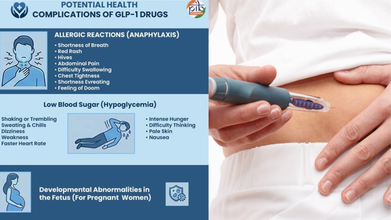
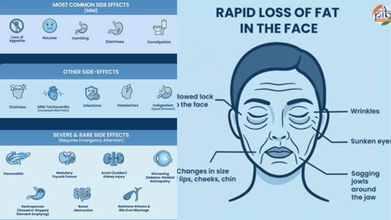
There are various side effects to taking GLP-1 drugs, including nausea and dizziness, to pancreatitis and medullary thyroid cancer.
Some serious side effects include
- Pancreatis
- Thyroid Cancer
- Acute (Sudden) Kidney Injury
- Worsening Diabetes-Related Retinopathy
- Gallstone & Bile Duct Blockage
- Rapid loss of fat in the face
- Wrinkles
- Sunken eyes
GLP-1 medications may also complicate various health conditions, such as allergic reactions, with shortness of breath and low blood sugar.
Rush For Generic Weight Loss Drugs
The government's advisory comes as patent for semaglutide -- an active ingredient in diabetes and anti-obesity drugs, specifically Wegovy and Ozempic -- expired on March 20.
This has led to a rush among Indian pharma companies to launch cheaper generic versions, significantly increasing affordability and access for millions battling Type 2 diabetes and obesity.
Also read: CDSCO threatens action against pharma companies for promoting GLP-1 weight-loss drugs
Major Indian drugmakers who launched their generic semglutide injection in the country in March include Sun Pharmaceutical Industries, Zydus Lifesciences, Alkem Laboratories, and Dr. Reddy’s Laboratories.
WHO Guidelines on GLP-1 drugs
Amid the increasing prevalence of GLP-1 drugs, the World Health Organisation (WHO), late last year, acknowledged its role in treating obesity.
However, it warned that medications like GLP-1 alone will not solve the problem affecting more than one billion people worldwide.
The global health body also issued conditional recommendations for using these therapies as part of a comprehensive approach that includes healthy diets, regular physical activity, and support from health professionals.
Ozempic And Wegovy Prices Slashed Again In India To Counter Cheaper Generics
Credit: iStock
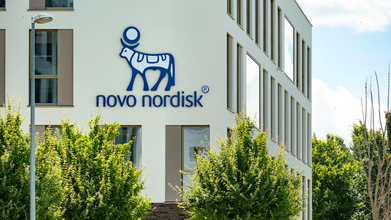
Danish pharma giant Novo Nordisk has once again reduced the prices of its blockbuster drugs Ozempic and Wegovy in India. The strategic move is aimed at staying ahead of the entry of the low-cost generic competition in the country.
Starting today, the Ozempic price in India will be cut by 36 percent, while Wegovy has seen a steeper 48 percent reduction — limiting the base price below Rs 6,000 per month.
While Ozempic is available in three dose strengths of 0.25 mg, 0.5 mg, and 1 mg in India, Wegovy has five dose strengths.
Ozempic's and Wegovy's lowest doses of 0.25 mg will now be priced at Rs 1,415 for a weekly shot from Rs 2,200 and Rs 2,712 earlier, respectively, Novo Nordisk India said in a statement on Tuesday.
The average price reduction across doses is 23.8 percent for Ozempic and 27 percent for Wegovy, it added.
Speaking to the media, Novo Nordisk stated that the price cut will benefit a large section of people with diabetes and obesity in India.
The generic weight loss drugs will open up a huge customer base, especially in India, with a high burden of diabetes and obesity.
Novo first slashed Wegovy's price for the first time by up to 37 percent from its launch price last year.
In addition to the entry of generics, the launch of rival Eli Lilly's blockbuster diabetes and obesity drug Mounjaro in India in 2025.
Also read: Semaglutide Becomes Cheap In India: A Gamechanger Or Health Gamble?
Entry Of Generics In India
Soon after the end of Novo Nordisk's patent on semaglutide, on March 20, a host of companies in India launched generic versions of Ozempic.
This includes NATCO Pharma's Semanat and Semafull, priced at Rs 1,290 per month and Rs 1,750 — about 90 per cent cheaper than Ozempic, costing Rs 8,800 per month.
Eris Lifesciences also announced its plans to launch a multi-dose vial under the brand name Sundae at the same price.
Dr. Reddy’s Laboratories, Sun Pharmaceutical Industries, and Glenmark Pharmaceuticals have also launched their generic versions of semaglutide.
Dr. Reddy’s Obeda is priced at Rs 4,200 per month, available in 2 mg and 4 mg strengths.
Sun Pharmaceutical Industries will sell under the brand names Noveltreat (doses ranging from Rs 900) and Sematrinity (doses ranging from Rs 750). Meanwhile, Glenmark’s GLIPIQ vials range from Rs 325 to Rs 440 per week.
Zydus Lifesciences has also announced the launch of its generic version of semaglutide injection under the brand names SEMAGLYNTM, MASHEMATM, and ALTERMET. The average monthly cost of the treatment will be about Rs 2,200, the company said in a statement.
How Does Semaglutide Work?
Semaglutide works as a GLP-1 receptor agonist that mimics the GLP-1 hormone to regulate appetite and blood sugar. It slows gastric emptying and makes you feel fuller longer. It also signals the brain to reduce hunger and cravings, and triggers the pancreas to release insulin when blood sugar is high.
Also read: This Pill Is More Effective For Weight Loss Than Ozempic, Scientists Say
They work by increasing insulin release in a glucose-dependent manner, decreasing the liver's production of glucagon, and slowing down the emptying of the stomach, which helps lower blood sugar levels after a meal. They also act on the brain to suppress appetite and increase feelings of fullness, leading to reduced calorie intake.
In people with type 2 diabetes, notes Harvard Health, the body's cells are resistant to the effects of insulin and the body does not produce enough insulin, or both. This is when GLP-1 agonists stimulate the pancreas to release insulin and suppress the release of another hormone called glucagon.
These drugs also act in the brain to reduce hunger and act on the stomach to delay emptying, so you feel full for a longer time. These effects can lead to weight loss, which can be an important part of managing diabetes.
Leptospirosis: US health officials flag outbreak risk after floods in Hawaii

Credit: iStock
Health officials in the US have issued a risk of leptospirosis — a bacterial illness — in Hawaii, after the “Kona low” storm floods.
The Hawaii Department of Health (DOH) and the Hawaiian Humane Society (HHS) have urged residents and recovery workers to monitor for signs of leptospirosis that can affect both people and pets.
Leptospirosis is caused by bacteria Leptospira, which are carried in the urine of infected animals, including rats, mice, mongoose, livestock, and dogs.
The disease can spread via the urine of infected animals and can enter the human body through broken skin or through the mouth, nose, or eyes.
“Hawaii already has among the highest rates of leptospirosis in the country due to its warm, wet climate,” said HHS and DOH in a joint statement.
“Flooding events like the recent Kona low storm can dramatically increase exposure risk by spreading contaminated soil and water across a broad area,” it added.
The agency urged people to check out symptoms in pets, such as fever, decreased appetite, vomiting, diarrhea, and muscle soreness, and get medical help.
The risk of Leptospirosis outbreak is common after a storm, because the dead animals are likely to spread the bacteria. Further, flooding also forces rodents out of their burrows, leading them into homes, shelters, and debris piles where they shed bacteria more easily.
What Is Leptospirosis?
Leptospirosis is one of the most prevalent zoonotic diseases worldwide, often linked to poor sanitation and agricultural practices that involve contact with animals or contaminated water.
The bacteria can survive in contaminated water or soil for weeks to months, primarily spreading through the urine of infected animals.
Humans can contract the disease through direct contact with infected urine or through contaminated food, water, or soil.
There are two main forms of leptospirosis: icteric leptospira, which presents with jaundice, and anicteric leptospira, a milder variant without jaundice. Leptospirosis can also manifest as Weil's disease, a severe complication.
What Are Symptoms Of Leptospirosis in humans?
Symptoms typically develop 2 to 30 days after exposure and can range from mild to severe. Initial signs often include
- high-grade fever,
- red eyes (conjunctival suffusion),
- calf tenderness,
- headache,
- dry cough,
- nausea,
- diarrhea.
In more serious cases, the infection can lead to complications such as
- jaundice,
- kidney damage
- liver damage,
- meningitis,
- respiratory issues,
- hemorrhages.
Pulmonary hemorrhage — acute bleeding from the lungs — can also occur, posing life-threatening risks such as respiratory and renal failure. The illness may last from a few days to several weeks, and without treatment, recovery can take months, according to the US Centers for Disease Control and Prevention (CDC).
What Precautions Should Be Taken?
To reduce the risk of leptospirosis infection, individuals are advised to take several important precautions. According to the CDC, it is essential to avoid wading through dirty rainwater, especially during the rainy season, and to wear gumboots in such conditions.
Proper care of any injuries or cuts is crucial, and frequent handwashing, particularly after handling food or working in potentially contaminated environments, is highly recommended. Additionally, individuals should avoid contact with animals that appear sick or are known carriers of the bacteria.
Vaccination is also vital—pet owners should ensure their pets are vaccinated against leptospirosis, especially if they are frequently exposed to water or wildlife. Staying hydrated by drinking plenty of clean water and preventing water stagnation around the home can further minimize the risk of infection.
- Follow Us :


© 2024 Bennett, Coleman & Company Limited