
- Health Conditions A-Z
- Health & Wellness
- Nutrition
- Fitness
- Health News
- Ayurveda
- Videos
- Medicine A-Z
- Parenting
Her Health, Her Power: A Call to Action This International Women's Day

Credit: iStock
She wakes before dawn, packs lunches, manages households, holds careers together, and still finds time to ask everyone else, "Are you okay?" The Indian woman is, in every sense, the backbone of her family. And yet, in giving so much of herself to others, she often becomes the last person she takes care of.
This International Women's Day, that needs to change.
Cancer remains one of the gravest health threats facing Indian women today.
Breast cancer has become the most frequently diagnosed cancer among Indian women — and unlike in Western countries, it is striking women in their 30s and 40s, at the very peak of their lives.
Cervical cancer, though almost entirely preventable, continues to claim thousands of lives every year — not because medicine has failed, but because awareness has.
Ovarian cancer, often called the "silent killer," is frequently caught only at advanced stages, making early vigilance all the more critical.
Thyroid cancer is emerging as a cancer that disproportionately affects women — occurring nearly three times more often in women than men. The good news is that it is also one of the most treatable cancers when detected early.
Women who notice a lump or swelling in the neck, unexplained hoarseness, or difficulty swallowing should not dismiss these signs.
A simple ultrasound and blood test can go a long way in ruling out — or catching — a problem early. The truth, however, is not bleak — it is urgent.
Early Detection Saves Lives
Most cancers, when found at an early stage, are highly treatable. Women above 40 should schedule regular clinical breast examinations and mammography.
Cervical cancer screening through a Pap smear or HPV test, starting as early as age 25–30, can detect precancerous changes before they ever become cancer. These tests are quick, safe, and available — what they need most is for women to simply show up.
Prevention, too, begins with everyday choices. Avoiding tobacco in all its forms — cigarettes, gutka, paan — is the single most powerful step. Regular physical activity, a diet rich in fruits and vegetables, maintaining a healthy weight, limiting alcohol, and getting the "HPV vaccine" (ideally between ages 9 and 14) can dramatically reduce cancer risk.
And perhaps just as importantly: listen to your body. An unusual lump, unexplained bleeding, or a symptom that won't go away is not something to push aside for later. Later can cost everything.
A healthy woman builds a healthy family — and a healthy nation. This Women's Day, let's give every woman around us the most meaningful gift possible: the reminder that her health is not selfish, it is essential.
Debby Ryan Opens Up About ‘Life-Altering’ Brain Injury And ‘Hellish’ Migraines That Followed

Credit: AP
Disney star Debby Ryan has opened up about living with a “life-altering” brain injury that left her with “hellish” migraines.
Appearing on a web series, the 33-year-old Ryan said she has also suffered five concussions and revealed the “fringe science treatment” that helped her recover.
“The brain injuries make things significantly worse,” the Disney Channel alum said.
“I had a pretty crazy life-altering brain injury a few years ago, and I was out of commission for, like, six months. And I went to this neurological rehab,” Ryan shared. “[I] went and did this fringe science treatment that was, like, really sci-fi and crazy. … That kind of got me back online, but there were some things that just did not come back.”
According to Ryan, her first four concussions stemmed from blunt-force injuries, while her most recent concussion was caused by “sustained shaking over, like, a minute of time.”
How The Injury Changed Her Life
Ryan said her life changed significantly after the injury. “There’s sort of pre-incident Debby and post-incident Debby,” she said.
She said that because of her migraines and brain injuries, she sometimes thinks better with her eyes closed, as the world can feel too bright and loud.
“Quite often the world is really loud. It’s really too bright, it’s too — there’s a lot going on,” she explained. “The visual data that I’m taking in can be so distracting.”
Ryan said she feels “very fortunate” that her “amazing” support system helped her deal with the aftermath of her latest concussion.
“[They] reminded me who I am and was and also held a lot of space for that to change — potentially permanently — and love me through that,” she said.
Ryan acknowledged that it must also have been difficult for her loved ones to process the changes.
How Does A Traumatic Brain Injury Affect You?
Cleveland Clinic explains that a traumatic brain injury (TBI) occurs when a sudden external force injures the brain. TBIs can range from mild to severe and may affect thinking, movement, memory, behavior and emotions.
Symptoms can include headaches, confusion, memory problems and mood or behavioral changes. Some people can also experience longer-term problems that affect their daily lives.
Types Of Traumatic Brain Injuries
There are two broad types of TBI:
- Penetrating TBI: This occurs when an object pierces the skull and enters the brain tissue, damaging part of the brain. It may also be called an open TBI.
- Blunt or closed TBI: This occurs when a forceful impact causes the brain to bounce or twist inside the skull.
According to the American Headache Society, post-traumatic headache is one of the most debilitating symptoms following a concussion.
Post-traumatic headache typically develops within seven days of a concussion or regaining consciousness after the injury. It can present in different ways but often resembles migraine in its symptoms and duration.
In some cases, these headaches can become persistent or chronic.
Women’s Heart Health May Start Changing In Late 30s, Way Before Menopause
Credit: iStock
For years, doctors believed that menopause was the big trigger for heart-related changes in women. Turns out, that might not be the full story.
A new study, published in the journal Hypertension, found that something called pulse pressure starts rising in women as early as their late 30s. That's way earlier than the time most women hit menopause.
What Is Pulse Pressure?
Pulse pressure is just the gap between the two numbers you see in a blood pressure reading. The top one and the bottom one. As we age, this gap tends to widen. And when it widens too much, it's usually a sign that the aorta, the body's biggest blood vessel, is getting stiffer.
A stiffer aorta means your heart has to work harder to pump blood around your body. Over time, that extra strain adds up.
What Did The Study Find
Researchers looked at data from more than 9,500 people, over 6,500 women and around 3,000 men, all part of the Framingham Heart Study. This is one of the longest-running heart health studies in the world, and the participants were tracked across three health checkups over 14 years.
What they found was interesting. Pulse pressure hits its lowest point and then starts climbing about ten years earlier in women than in men. For women, this shift happens in the late 30s. For men, it's usually the late 40s. And by the time women reach around 60, their pulse pressure is consistently higher than men's.
This pattern showed up even when a woman went through menopause. Early, late, right on time, didn't matter. The rise in pulse pressure followed the same timeline regardless.
Gary F Mitchell, one of the researchers on the Framingham Heart Study, said the team was genuinely caught off guard by this. Menopause timing, it seems, wasn't the main thing driving the change; something else was clearly at play too.
"To our huge surprise, our results suggest that factors other than the timing of the final menstrual period were likely involved in the accelerated increase in pulse pressure in women after midlife," he noted.
Why This Actually Matters
Elevated pulse pressure isn't just a random number on a report. It's linked to a higher risk of heart disease, dementia, and even kidney disease. It can also make managing high blood pressure trickier, since some medications don't work as well once arteries get stiffer.
The bigger takeaway from this study is pretty simple. Women's heart health might need attention way earlier than we've been taught to think. Instead of waiting until menopause to start paying attention to cardiovascular health, doctors might need to start the conversation years earlier, around the late 30s.
So, if you're a woman in your 30s reading this, this isn't meant to scare you. It's just a reminder that heart health isn't something to put off until your 40s or 50s. A basic check on your pulse pressure now might tell you more than you'd expect.
Urine Leakage When You Cough, Sneeze Or Exercise? It Could Be Pelvic Floor Dysfunction, Say Experts
Credit: iStock
Urine leakage when you cough, sneeze or exercise is often dismissed as something women simply have to live with after pregnancy or childbirth. But pelvic floor problems can affect both women and men and may interfere with daily activities, confidence, relationships and sexual health.
Many people quietly live with symptoms such as urine leakage, urgency, pelvic pressure or pain, while even those who seek medical help may not know the underlying cause. Speaking to HealthandMe, doctors said these can be signs of pelvic floor dysfunction — a treatable condition that should not be ignored.
Early identification and appropriate treatment can help prevent symptoms from disrupting everyday life.
What Is Pelvic Floor Dysfunction?
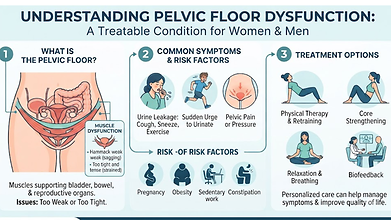
Pelvic floor dysfunction occurs when the muscles in the pelvis do not relax, contract or coordinate properly. These muscles support the bladder, bowel and reproductive organs.
According to the Cleveland Clinic, the pelvic floor muscles act like a supportive hammock. When they are too tight, weak or poorly coordinated, normal bladder, bowel and sexual functions can be affected.
Pregnancy and childbirth are important risk factors, but pelvic floor problems can also affect men. Symptoms may include urinary urgency or leakage, pelvic pain or pressure and bowel problems.
Other factors such as sedentary lifestyles, stress, obesity and constipation may be contributing to pelvic floor dysfunction.
Also read: Endometriosis Can Take Years To Diagnose But This AI Tool Can Identify Its Signs In 18 Milliseconds
What Can Increase The Risk Of Pelvic Floor Problems?
Dr Nirmala M, Consultant, Obstetrician, Gynaecologist & Fertility Specialist, Motherhood Hospitals, Bengaluru, told HealthandMe that sedentary office work, stress, obesity and constipation can contribute to pelvic floor problems. Poor water intake and regularly holding urine can also play a role.
“It is seen that almost four of every five cases of incontinence observed in hospitals have been identified among young women aged 25 to 35 years old,” she said.
Pelvic floor dysfunction can affect men too, particularly in association with urinary, bowel or prostate-related problems.
Dr Meghana Reddy Jetty, Senior Consultant - Obstetrics, Gynecology, Laparoscopy and Aesthetic Gynecology, Aster Women and Children, Bengaluru, said men may also experience urinary leakage and bowel control problems, including in association with pelvic operations and prostatic procedures.
“Men have pelvic floor muscles too, which are responsible for bladder and bowel control and proper functioning of the pelvis,” she said.
What Are The Early Signs?
Read More: Ferritin Face: Can Pale Skin Signal Iron Deficiency?
Symptoms can vary depending on whether the pelvic floor muscles are weak, too tight or poorly coordinated.
Common signs include:
- Urine leakage while coughing, sneezing or exercising
- A sudden or uncontrollable urge to urinate
- Difficulty emptying the bladder or bowel
- Pelvic heaviness or pressure
- Pelvic discomfort
- Pain during intercourse
Dr Nirmala said urinary leakage during physical strain and a sudden, uncontrollable urge to urinate are among the early symptoms.
Dr Meghana said occasional urine leakage, difficulty emptying the bladder or bowel, pelvic heaviness, discomfort and pain during sexual intercourse can indicate that the pelvic floor is not functioning properly.
How Can Pelvic Floor Dysfunction Affect Daily Life?
The condition can affect more than bladder or bowel control. Fear of leakage, urgency or pain may cause people to avoid exercise, travel and social activities.
Dr Nirmala said some women avoid parties and long-distance travel because of difficulty finding a nearby bathroom. In serious cases, they may rely on diapers or sanitary pads, affecting confidence and increasing stress.
Pelvic floor dysfunction can also affect sexual health. Pain and difficulty relaxing the pelvic muscles may lead women to avoid sexual activity.
“It can hurt sexual health if pain and difficulty in relaxing pelvic muscles cause one to avoid sexual activity. This kind of problem that seemingly just involves the physical aspect can slowly but surely have a great effect on one's confidence, relationships and behavior in general,” said Dr Meghana.
Can Exercise Make Pelvic Floor Symptoms Worse?
Exercise can support pelvic health, but the type, intensity and technique matter.
Dr Swati Rai, Senior Consultant-Obstetrician and Gynecologist at Cloudnine Group of Hospitals, Noida, said exercises such as Kegels, diaphragmatic breathing, pelvic tilts, glute bridges and gentle core strengthening can help support the pelvic floor during and after pregnancy, depending on the individual.
“Kegels involve gently contracting the muscles used to control urine, holding briefly and then completely relaxing; they should not be routinely practized while urinating,” she told HealthandMe.
However, excessive or improperly performed high-impact exercise, intense interval training, repeated jumping and weightlifting can place additional pressure on the pelvic floor, particularly when breathing and core control are inadequate.
Dr Meghana said pelvic-floor training should focus on muscle control rather than simply increasing repetitions.
“So, training of pelvic muscles should be more about learning muscle control - knowing when to contract and when to relax - rather than just doing more and more repetitions,” she said.
Dr Swati said excessive straining, breath-holding or incorrectly performed high-impact exercises may aggravate symptoms.
Is Pelvic Floor Dysfunction Treatable?
Pelvic floor dysfunction can improve significantly with appropriate, personalized treatment. However, treatment depends on whether the muscles are weak, overly tight or poorly coordinated.
Treatment may include:
- Pelvic floor retraining
- Physical therapy
- Core strengthening
- Relaxation and breathing exercises
- Biofeedback
- Follow Us :


© $2026 Times Horizon Private Limited