
- Health Conditions A-Z
- Health & Wellness
- Nutrition
- Fitness
- Health News
- Ayurveda
- Videos
- Medicine A-Z
- Parenting
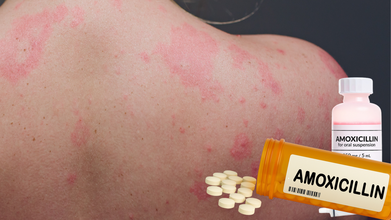
What To Do When Amoxicillin Gives You Rashes?
Credits: iStock
This year had been a year of flu, fiver, bacterial illness and more. One of the over the counter medicine that many people often buy, or is prescribed, especially for bacterial infections is Amoxicillin.
What Is Amoxicillin?
It is a widely prescribed antibiotic that is used to treat bacterial infections in children and adults. It is part of the penicillin class of medications and it inhibits the growth of bacteria and allows the immune system to efficiently eliminate the infection. It is commonly used to treat bacterial infections affecting the respiratory tract, urinary tract, and skin.
However, about 5 to 10 per cent of children prescribed this may develop skin rashes as a common side effect. A rash can develop in two forms: allergic and non-allergic. A rash from the drug Amoxicillin could last up to a week.
What Kind Of Rashes Are Caused By Amoxicillin?
A Maculopapular rash is a flat rash that occurs like red patches, raised bumps and spreads over the body.
Hives are itchy, raised red or skin-colored welts that can change shape and location.
Erythema Multiforme are more severe, featuring target-like lesions or bull's-eye shapes with central red spot, pale ring, and red outer ring.
Anaphylactic Reaction is a rare but severe allergic reaction that includes symptoms like difficulty in breathing, swelling of the face, lips, or tongue, hives and rapid drop in blood pressure.
Non-Allergic Amoxicillin Rash are flat, red spots that may be slightly raised, but not harmful. These usually appear o the 5th to 7th day after the start of amoxicillin and can appear on the chest, abdomen, back, face, arms, and legs. It may get worse before it starts to get better.
What Signs Should You Look Out For?
Warning signs include rashes within two hours of the first amoxicillin dose, difficulty breathing or swallowing, or very itchy hives.
The allergic reaction is caused by one's immune system reacting to that medication as if it were a foreign invader in the body.
More girls than boys develop these rashes, and in children this is even more common. In fact, the rash by amoxicillin was first noted in 1960s, in children who were being treated with ampicillin, recorded the Journal of Pediatrics.
What Can You Do If You Get Amoxicillin Rashes?
Among treatment, the first step should be to see your physician and immediately stop taking the medication. Drinking water and enough fluids can also help. Your doctor too would prescribe you medications and lotions to soothe your itching.
Hives can also be treated with the over the counter drug Benadryl. However, you must go see your doctor or GP, and not self medicate.
A doctor may treat the rash in various ways, including stopping the medication as the first line of defense. Then the doctor may give oral antihistamines (e.g., cetirizine) for the itch. Some doctors may use topical steroids to help with the itch and redness.
Before visiting your doctor, take photos of your rash, send it to your GP, as if it is contagious. Even after you start the treatment, stay in touch with your healthcare provider for any development.
Silent Deficiency, Rising Risk: Why Protein May Be The Missing Link In Diabetes Care
Credit: Canva
On most clinic days, I meet patients who are doing what they believe is “everything right” for their diabetes—avoiding sweets, switching to brown rice, walking regularly. Yet their blood sugar remains stubbornly high, and complications quietly advance. When we look closer, the problem is often not just what they are cutting out, but what they are missing.
This is where the story changes. In the larger conversation on diabetes, protein rarely takes center stage. But it should.
India’s Diabetes Burden: Looking Beyond Sugar
India continues to carry one of the world’s largest burdens of Type 2 diabetes. Urban lifestyles, reduced physical activity, and easy access to refined carbohydrates have all played their role. Public messaging has, understandably, focused on reducing sugar intake.
But diets are not built on sugar alone. In countless Indian homes, especially those of vegetarians and people with limited means, the bulk of the diet revolves around cereals. Rice, wheat, or millets dominate the plate.
Protein, on the other hand, tends to be an afterthought. This creates a subtle but important imbalance: a high intake of carbohydrates coupled with insufficient protein. It's a problem that seldom gets much attention, yet it has a profound impact on metabolic health.
Understanding the Real Culprit: Insulin Spikes
To grasp the significance, let's break down the post-meal process. Eating foods high in carbohydrates, particularly those that are refined, causes a swift influx of glucose into the bloodstream. The body's response is to release insulin, a hormone that facilitates the transport of glucose into cells. While occasional spikes are perfectly normal, frequent and repeated ones put a strain on the system.
As the years pass, our cells start to ignore insulin's signals. This phenomenon, insulin resistance, is the primary problem in Type 2 diabetes. In response, the pancreas kicks into overdrive, cranking out extra insulin to try to keep up. However, this increased demand takes its toll. This slow decline in pancreatic function is what fuels the disease's advancement and opens the door to further health issues.
Also read: Diabetes Diet Plan: South Indian Breads That Are Better Than Roti
Protein: The Quiet Regulator
Now, where does protein fit into this? Protein does not cause sharp rises in blood sugar. In fact, when included in meals, it acts as a natural regulator. It slows down how quickly the stomach empties, meaning glucose enters the bloodstream more gradually. It also promotes a sense of fullness, reducing the tendency to overeat.
More importantly, protein helps maintain muscle mass—and muscle is one of the body’s largest sites for glucose utilization. Simply put, healthier muscles mean better sugar control.
A meal that includes adequate protein alongside carbohydrates behaves very differently from one that is carb-heavy and protein-poor.
The Invisible Problem: Hidden Protein Deficiency
Protein deficiency is not always obvious. Many individuals appear well-fed, even overweight, yet lack adequate protein at a cellular level. This is often referred to as “hidden malnutrition.”
In people living with diabetes, this becomes particularly concerning.
Low protein intake contributes to gradual muscle loss, especially with ageing. This loss—known as sarcopenia—reduces metabolic efficiency and worsens insulin resistance. Recovery from illness slows down. Wound healing becomes less effective. The body, in a sense, loses its resilience.
Also read: Shift to Plant-Based Proteins, Low-Fat Dairy To Boost Heart Health: American Heart Association
When Deficiency Meets Disease: A Compounding Risk
Diabetes is not just about blood sugar numbers; it is about long-term impact.
When protein intake is inadequate, the risks multiply. Nerve damage becomes more likely. Kidney health may deteriorate faster. Physical strength declines, increasing frailty and reducing quality of life.
There is also a vicious cycle at play. Reduced muscle mass leads to poorer glucose control, which in turn accelerates further muscle breakdown. Breaking this cycle requires more than medication—it requires nutritional correction.
Also read: 1 In 4 Diabetic Patients in India Suffer from Liver Fibrosis, Finds Lancet Study
How Much Protein Do We Really Need?
For most healthy adults, daily protein needs are modest but essential—roughly 0.8 grams per kilogram of body weight.
In individuals with diabetes, requirements are often slightly higher, around 1.0 to 1.2 grams per kilogram per day. However, this must always be individualized, especially in those with kidney disease or other medical conditions.
The key message is not excess, but adequacy—and consistency.
Making It Practical: The Indian Plate Reimagined
The good news is that improving protein intake does not require expensive supplements or drastic dietary changes.
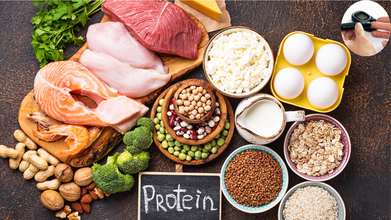
For vegetarians, traditional foods offer excellent options: dals, chickpeas, kidney beans, paneer, curd, soy products, nuts, and seeds. For those who consume non-vegetarian foods, eggs, fish, and lean meats provide high-quality protein.
The simplest strategy is also the most effective: ensure that every meal contains a meaningful source of protein.
A bowl of dal with lunch, a serving of curd with dinner, or an egg at breakfast—these small additions can create a measurable difference over time.
Also read: What Is The Viral ‘Boy Kibble’ Trend?
Beyond Diet: Completing the Picture
Nutrition does not work in isolation. Regular physical activity—particularly resistance exercises—helps preserve and build muscle mass, enhancing insulin sensitivity. Adequate sleep supports hormonal balance. Stress management prevents metabolic disruptions that worsen glycemic control.
Diabetes care is not a single intervention; it is a continuum of daily choices.
Conclusion: Rethinking What We Prioritize
For too long, diabetes management has been framed as a battle against sugar alone. While reducing excess carbohydrates remains important, it is only half the story.
The other half lies in restoring balance. Addressing the protein gap offers a simple, accessible, and powerful tool to stabilize blood sugar, protect muscle health, and reduce long-term complications.
Protein is not just another nutrient on the plate. In the context of diabetes, it is part of the treatment itself.
Can Screens Rewire Your Toddler's Brain? Virtual Autism Explained

Virtual autism must not be confused with autism spectrum disorder (ASD). (Photo credit: iStock)
In today’s digital age, screens have become almost inseparable from daily life—even for very young children. While technology offers convenience and learning opportunities, increasing clinical observations have raised concerns about a phenomenon often referred to as “virtual autism." In an interview with Health and Me, Dr Aarti Javeri Manek, Paediatric Neurologist at Sir HN Reliance Foundation Hospital, explained what virtual autism is and the impact of screen time on children's brain health.
What is “virtual autism”?
Virtual autism is not a formally recognised medical diagnosis but rather a descriptive term used for children—typically toddlers—who exhibit autism-like features in the context of excessive screen exposure, particularly during critical periods of brain development. These children may show reduced eye contact, delayed speech, poor social interaction, and limited responsiveness to their environment.
Also Read: Cancer Is The 10th Leading Cause Of Death In Indian Children: Study
However, it is crucial to distinguish this entity from clinical Autism Spectrum Disorder (ASD). ASD is a neurodevelopmental condition, often with a strong underlying genetic and biological basis, present in addition to exogenous influences. External stimulus exposure may not even be apparent. In contrast, children with virtual autism often demonstrate significant improvement when screen time is reduced and replaced with real-world, interactive experiences. This reversibility is a key differentiating factor.
Read more: Is My Child Shy Or Autistic? Psychiatrist Shares Tips To Help Parents Spot Early Signs
What early signs should parents watch for?
From a neurological perspective, early childhood is a period of rapid synaptic growth, heavily influenced by sensory and social input. When screens replace human interaction, this can impact language acquisition, attention, and social interaction.
Some red flags that may suggest screen-related developmental delays include:
- Limited or absent eye contact
- Reduced response to name
- Delayed speech or loss of previously acquired words
- Preference for screens over people
- Decreased or limited gestures (not pointing, showing, or sharing interest)
- Repetitive behaviours such as watching the same videos excessively or viewing the same rhyme persistently
- Irritability or meltdowns when screens are removed
While these signs overlap with autism, the context is important. A history of prolonged, unsupervised screen exposure, often exceeding 3–4 hours per day in toddlers, should prompt consideration of environmental impact.
Read more: Can Cell Therapy Be The Future Of Autism Treatment?
Are toddlers at greater risk compared to older children?
Yes, significantly so. The first three years of life are critical for brain development, particularly for language, social bonding, and emotional regulation. During this period, the brain relies heavily on serve-and-return interactions—a child babbles, a caregiver responds; a child points, and a parent names the object. These exchanges build neural circuits essential for communication and cognition.
Screens, even educational ones, are inherently passive. They do not adapt in real time to a child’s cues in the same way a human does. Excessive exposure during this sensitive window can therefore displace meaningful interactions, leading to significant developmental delays.
Older children, while not immune, are generally more resilient, as they have already established foundational social and language skills. However, excessive screen time in this group may still contribute to attention difficulties, behavioural issues, and reduced social engagement.
What can parents do?
The encouraging aspect of virtual autism is its potential reversibility if it is identified early. Reducing screen exposure, especially in children under 2 years, and reintroducing interactive play, storytelling, and face-to-face communication may lead to noticeable improvements. Ultimately, screens are tools and not substitutes for relationships. In early childhood, it is these relationships that shape the developing brain most profoundly.
Shocking! Man Gets A Tattoo On His Neck; Months Later, Flesh Turns Black And Rots Away

Getting a tattoo is a form of self-expression, but one must take extra care while getting one. (Photo credit: iStock)
For some people, getting inked is more than a passion—it is a form of self-expression. And tattoos are nothing short of an addiction; it is not easy to stop at one. Despite being a painful procedure that requires a great deal of caution—using fresh needles and safe ink, for instance—several incidents come to light where getting a tattoo goes wrong in irreversible ways. In a recent case, a man developed a weeping, black ulcer of dead flesh on his neck months after getting a tattoo. In this case, doctors blamed this reaction on the colour of the tattoo ink—it may have triggered inflammation that caused the skin to blacken and die.
A reaction from the tattoo ink
A 20-year-old man had a red cross tattoo on the base of his neck. After three months, it faded away spontaneously and was replaced by scars and bumps on either side of the neck, accompanied by a necrotic ulcer. In this case, when the tissue blackens and dies, it results in a painful wound. The unnamed man was hospitalised five months after getting his first tattoo. Doctors examining the patient found that the lymph nodes, which help fight infections, were swollen and hard. Doctors also examined a large crusted ulcer, which had spread across the base of the neck and had seeped into deeper layers of skin.
Read more: Tattoos May Increase Cancer Risk, Study Suggests
Doctors also performed an MRI and found large lumps around the ulcer that measured up to 5 cm. There were two blood clots in the jugular vein as well. Two biopsies were taken of the necrotic ulcer, but they did not reveal what may have triggered the necrosis. The team was then concerned about the scan results and how fast the patient's condition was progressing. He was then rushed into surgery, where doctors removed the ulcer along with masses on the neck. His neck was then reconstructed using fat from the thighs. The patient was then diagnosed with necrotising granulomatous lymphadenitis.
What is necrotising granulomatous lymphadenitis?
Necrotising granulomatous lymphadenitis is an inflammatory condition wherein the lymph node tissues die and form clumps of immune cells known as granulomas. This can develop in response to an injury, and in this case, doctors said that the tattoo was to blame.
Doctors said that heavy metals like cadmium and mercury in organic tattoo ink can result in an immune response. From surgery to recovery, the patient's case is published in the journal JAMA Otolaryngology. Experts say that this is only the second known case of necrosis after a tattoo.
What are the riskiest spots for a tattoo?
Getting a tattoo can be painful, but for some people, the pain is worth it. However, according to experts, there are some spots that are not ideal for getting a tattoo. These are:
- Eyes—can lead to partial or complete blindness
- Genitals – heightened risk of contracting sexually transmitted diseases and infections
- Spine – a tattoo on the spine is extremely painful, and if it goes wrong, there could be irreversible repercussions
- Follow Us :


© 2024 Bennett, Coleman & Company Limited