
- Health Conditions A-Z
- Health & Wellness
- Nutrition
- Fitness
- Health News
- Ayurveda
- Videos
- Medicine A-Z
- Parenting
'Don’t Do Drugs, Kids', Says Paris Jackson As Shows The Holes In Her Nose After Drug Use

Credits: Wikimedia Commons, IMDb, TikTok
Paris Jackson, the 27-year-old daughter of the late Michael Jackson opened up about drug earlier indulgence in drugs. In a TikTok video, she showed off her 'perforated septum'. She said, "I have a really loud whistle when I breathe through my nose. And that is because I have what is called a perforated septum," she explained, noting it’s "slightly different from a deviated septum."
She said this happened from drugs and said in her video "That is from what you think it's from. Don't do drugs, kids."
Paris Jackson shared with her fans about her six-year achievement of staying sober, however, she says that she still lives the consequences. However, she notes that she currently does not plan to undergo surgery to fix her nose, because "you have to take pills when you have a surgery that gnarly."
Perforated Nose From Drug Use
This is commonly called the Coke Nose. A 2013 study from the Iranian Journal of Otorhinolaryngology states that perforation of the nasal septum is an uncommon condition. When it occurs, its cause is most often idiopathic or traumatic. Nasal septum perforation may also be the presenting sign of drug addiction or a potentially life-threatening or serious systemic illness, even in an asymptomatic patient. This happens due to intranasal drug abuse, common with cocaine, heroin, and other opioids.
What Is A Coke Nose?
It is a colloquial term used for the nasal damage caused by prolonged cocaine use. Damage can range from mild to severe, leading to conditions such as a deviated septum, a perforated septum (hole in the nose from coke), or saddle nose deformity. People who inhale its vapors (known as freebasing) or snort cocaine through their nose put themselves at risk for the following conditions.
Chronic nasal insufflation (snorting) of cocaine often causes recurrent, painful sinus infections. This is particularly severe in users with damage like nasal perforations, or a palatal perforation (a hole between the mouth's roof and nasal cavity).
The persistent damage and irritation enable bacteria or fungus to colonize the sinuses. Such infections can be serious, potentially increasing tissue loss, causing deformities, and leading to life-threatening conditions.
Chronic cocaine use can cause septal perforations in the nose and may also lead to a hole (perforation) in the oral palate. This perforation connects the mouth and nasal cavity, causing food and drink to leak into the nasal area. Since the nasal cavity cannot properly process food remnants, these remnants often get stuck in the sinuses, significantly increasing the risk of sinus infections and related issues.
What Are The Common Symptoms Or Signs Of Coke Nose?
- Frequent nosebleeds
- Frequent runny nose
- Recurrent sinus infections
- Difficulty breathing
- Sleep apnea
- Noisy breathing
- Nose deformity
Can Coke Nose Be Treated?
Fortunately, many long-term effects of drug abuse are reversible or treatable. However, long-term resolution for conditions requiring surgical options, such as saddle nose correction or correction of septal or palatal perforations, depends entirely on the cessation of cocaine use.
Leptospirosis: US health officials flag outbreak risk after floods in Hawaii

Credit: iStock
Health officials in the US have issued a risk of leptospirosis — a bacterial illness — in Hawaii, after the “Kona low” storm floods.
The Hawaii Department of Health (DOH) and the Hawaiian Humane Society (HHS) have urged residents and recovery workers to monitor for signs of leptospirosis that can affect both people and pets.
Leptospirosis is caused by bacteria Leptospira, which are carried in the urine of infected animals, including rats, mice, mongoose, livestock, and dogs.
The disease can spread via the urine of infected animals and can enter the human body through broken skin or through the mouth, nose, or eyes.
“Hawaii already has among the highest rates of leptospirosis in the country due to its warm, wet climate,” said HHS and DOH in a joint statement.
“Flooding events like the recent Kona low storm can dramatically increase exposure risk by spreading contaminated soil and water across a broad area,” it added.
The agency urged people to check out symptoms in pets, such as fever, decreased appetite, vomiting, diarrhea, and muscle soreness, and get medical help.
The risk of Leptospirosis outbreak is common after a storm, because the dead animals are likely to spread the bacteria. Further, flooding also forces rodents out of their burrows, leading them into homes, shelters, and debris piles where they shed bacteria more easily.
What Is Leptospirosis?
Leptospirosis is one of the most prevalent zoonotic diseases worldwide, often linked to poor sanitation and agricultural practices that involve contact with animals or contaminated water.
The bacteria can survive in contaminated water or soil for weeks to months, primarily spreading through the urine of infected animals.
Humans can contract the disease through direct contact with infected urine or through contaminated food, water, or soil.
There are two main forms of leptospirosis: icteric leptospira, which presents with jaundice, and anicteric leptospira, a milder variant without jaundice. Leptospirosis can also manifest as Weil's disease, a severe complication.
What Are Symptoms Of Leptospirosis in humans?
Symptoms typically develop 2 to 30 days after exposure and can range from mild to severe. Initial signs often include
- high-grade fever,
- red eyes (conjunctival suffusion),
- calf tenderness,
- headache,
- dry cough,
- nausea,
- diarrhea.
In more serious cases, the infection can lead to complications such as
- jaundice,
- kidney damage
- liver damage,
- meningitis,
- respiratory issues,
- hemorrhages.
Pulmonary hemorrhage — acute bleeding from the lungs — can also occur, posing life-threatening risks such as respiratory and renal failure. The illness may last from a few days to several weeks, and without treatment, recovery can take months, according to the US Centers for Disease Control and Prevention (CDC).
What Precautions Should Be Taken?
To reduce the risk of leptospirosis infection, individuals are advised to take several important precautions. According to the CDC, it is essential to avoid wading through dirty rainwater, especially during the rainy season, and to wear gumboots in such conditions.
Proper care of any injuries or cuts is crucial, and frequent handwashing, particularly after handling food or working in potentially contaminated environments, is highly recommended. Additionally, individuals should avoid contact with animals that appear sick or are known carriers of the bacteria.
Vaccination is also vital—pet owners should ensure their pets are vaccinated against leptospirosis, especially if they are frequently exposed to water or wildlife. Staying hydrated by drinking plenty of clean water and preventing water stagnation around the home can further minimize the risk of infection.
Cicada COVID Variant: Use Masks To Avoid Transmission, Say Experts
Credit: Canva
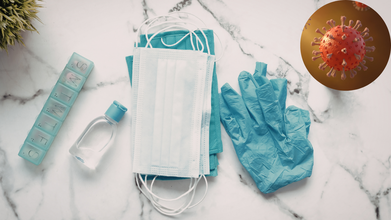
The emerging COVID variant, BA 3.2, nicknamed “Cicada,” has revived memories of the COVID-19 pandemic that disrupted the world and raised fresh concerns about the possibility of severe illness.
The variant has been given the nickname “Cicada” due to its reappearance after remaining dormant or undetected for a long period, much like cicadas that emerge after years underground.
With the variant already spread to 23 nations, as of February, experts are urging people to use masks to avoid transmission.
What Is The Cicada COVID Variant?
Cicada was first identified in a respiratory sample in South Africa in November 2024.
It is a descendant of the Omicron BA.3 lineage, and is genetically distinct from the previously circulating JN.1 lineages (including LP.8.1 and XFG).
BA.3.2 comprises two major branches, BA.3.2.1 and BA.3.2.2. BA.3.2.2 also has substitutions like: K356T, A575S, R681H, and R1162P.
The World Health Organization (WHO) has designated BA.3.2 as a Variant Under Monitoring (VUM). It means the variant may not be that dangerous yet, but it may have concerning mutations.
As per the US CDC’s latest Morbidity and Mortality Weekly Report, Cicada has “70 to 75 substitutions and deletions in the gene sequence of its spike protein”.
Time To Mask Up
Dr. Sai Balasubramanian, a doctor and healthcare strategy executive, writing in Forbes, stressed the need to follow COVID practices such as masks and hand hygiene.
"Healthcare professionals recommend taking general precautions, similar to those used to prevent most viral transmission: get vaccinations when appropriate, wear masks in crowded areas or indoors where there is a high risk of transmission," he said.
He also urged “avoid individuals who have known illness or infections, wash hands frequently, and continue to stay apprised of local community guidelines and the infection spread”.
Cicada variant “is different from the (Covid-19) viruses we have been dealing with for the last two years," Prof Ravi Gupta, of Cambridge University, who advised the UK government during the pandemic, was quoted as saying by The Mirror.
Will The Cicada Variant Cause Severe Illness?
The SARS-CoV-2 virus has the potential to turn deadly in people, especially among vulnerable populations such as those with a weak immune system.
The Cicada variant is particularly concerning as it provides no immune protection to people with previous infection or even vaccination.
Yet, the World Health Organization and health experts advise that existing COVID vaccinations can help prevent severe illness and hospitalization.
"It would appear that all the protections we have from our experience with the virus and with vaccines probably offer more limited—not zero—but more limited protection against this strain," Dr. William Schaffner, professor of infectious diseases at Vanderbilt University Medical Center, was quoted as saying by Time.
Cicada Variant: Any New Symptoms?
The symptoms of Cicada aren't different from those of previous COVID variants. These include:
- sore throat,
- fever or chills,
- headache,
- cough,
- body aches,
- runny nose
- nausea
- diarrhea.
Tpoxx Should No Longer Be Used For Treating Mpox: European Drug Regulator
Credit: Canva/ US CDC
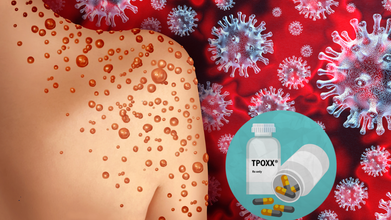
The European Medicines Agency (EMA) has advised patients and physicians not to use the antiviral drug Tecovirimat SIGA (marketed as Tpoxx) to treat mpox disease.
The advisory from the EMA’s Committee for Human Medicines (CHMP) is based on data from four studies carried out in different regions, which showed that compared with placebo treatment with Tpoxx did not
- heal lesions faster
- relieve pain
- help clear the virus from the body faster.
“The animal data demonstrated antiviral activity and a survival benefit when treatment was started early and a reduced efficacy if treatment was initiated later after exposure to the virus,” the EMA said in an official statement.
However, the clade 2 mpox outbreaks, which began in 2022, led the World Health Organization (WHO) to declare mpox a Public Health Emergency of International Concern (PHEIC), giving the drugmaker SIGA Technologies an opportunity to conduct efficacy studies in people.
A second PHEIC was declared in 2024 over clade 1 outbreaks.
Key recommendations by the EMA include:
- Restricting the use of Tpoxx over no benefit.
- Due to lack of safety concerns, patients who initiated treatment with Tpoxx can continue till course ends.
- Tpoxx can still be used as an antiviral to treat other orthopoxvirus infections, including smallpox and cowpox
- There is currently no other drug authorized in the EU for treating mpox infections.
Tpoxx For Mpox: What Does The US CDC Say
The Centers for Disease Control and Prevention also noted that the role of Tpoxx in treating mpox "is investigational".
The federal agency called for "additional clinical trials" to explore the role of Tpoxx in treating mpox infections in patients with severe immunocompromise, including advanced HIV.
"The findings from the clinical trials suggest that most patients with monkeypox who do not have severe disease or risk factors for severe disease (e.g., severe immunocompromise) will recover with supportive care and pain management," the CDC said.
Also read: Missouri Reports 2 Cases Of Deadly Clade I Mpox, US Tally Rises To 3 In 2026
What Is Mpox?
Mpox, earlier known as monkeypox, is a rare viral disease that belongs to the orthopoxvirus genus, the same family as the more well-known smallpox virus.
Though generally less severe, mpox can still lead to serious health complications, especially in immunocompromised individuals, children, and pregnant women.
The virus is transmitted from animals to humans and can spread from person to person through direct contact with infectious sores, scabs, body fluids, respiratory droplets, or contaminated materials.
Also read: Mpox Outbreak: First Case of Severe Strain Reported in New York City
The earliest signs of mpox start within 14 days of being infected. A person may not know they have mpox and can spread the disease.
The common symptoms include:
- fever,
- sweating,
- chills through the body.
- rashes, which start as a distant rash on the face and can continue throughout the body,
- swollen lymph nodes, migraine,
- muscle aches,
- fatigue,
- weakness
- back pain.
Mpox: Current Cases
In February, a total of 1,184 confirmed mpox cases and four deaths were reported from 46 countries, as per the WHO's latest outbreak update.
Of these cases, 58.6 percent were reported in Africa — mainly from Madagascar, the Democratic Republic of the Congo, Kenya, Burundi, and Liberia.
The WHO said all clades continue to circulate, and transmission of the virus continues mostly within sexual networks, followed by household transmission. All age-groups in some historically endemic areas are being affected.
“Unless mpox outbreaks are rapidly contained and human-to-human transmission is interrupted, there is a risk of sustained community transmission in all settings,” the WHO said.
- Follow Us :


© 2024 Bennett, Coleman & Company Limited