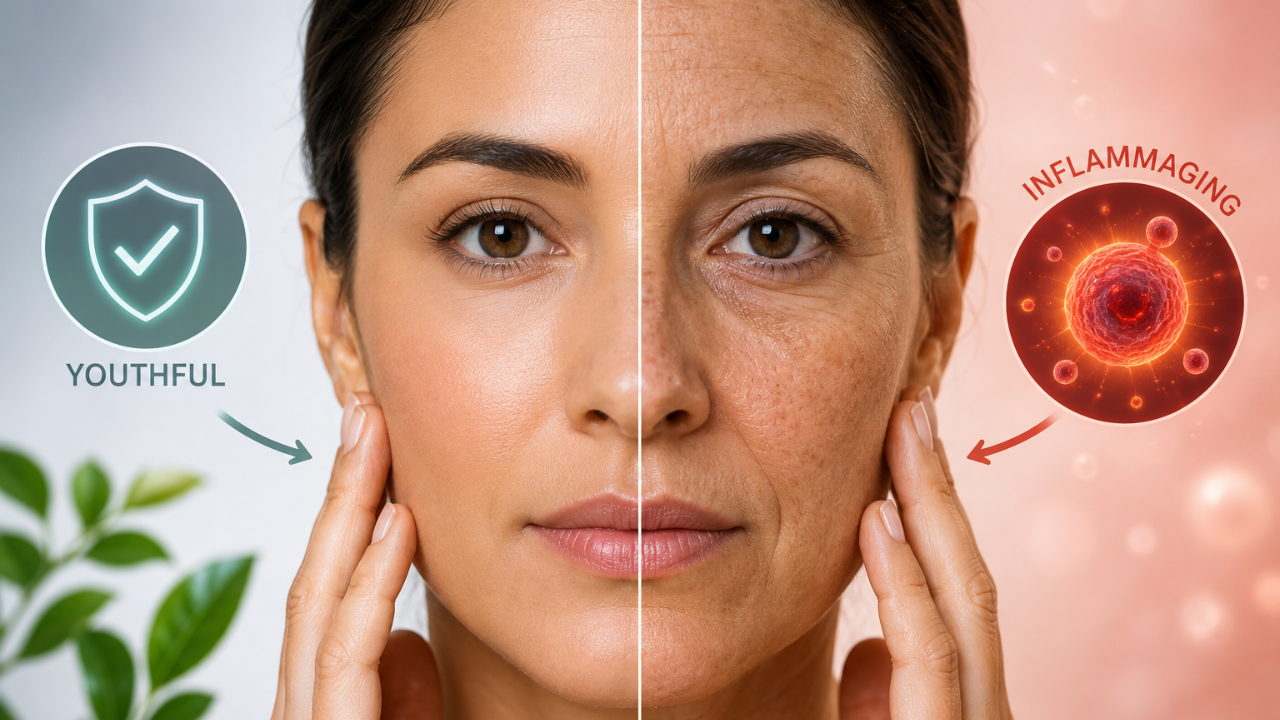
Inflammaging is skin ageing that happens because of ongoing, mild swelling inside the body. It is not like a rash or a breakout. This swelling does not show up on the outside. You cannot see it with your eyes. But over months and years, it slowly breaks down collagen and elastin. These two things help keep skin firm and elastic. The skin then can start to look older before it should. The word brings together "inflammation" and "ageing." It helps explain things skin doctors often notice with people. Many people in their late twenties or early thirties come in with fine lines or dull and uneven skin. Most of the time, you would see these signs a lot later, maybe about ten years down the line. What Triggers Inflammaging? The swelling that leads to inflammaging happens because of things we see or feel every day. It doesn’t just come from one big thing. The main things that start this are: UV exposure: Even short times in the sun each day without sunscreen keeps the body's skin working on its stress systems. In India, the sun is a strong factor through all the year, not just in summer.Air pollution: Tiny bits in the air land on the skin and make free radicals. People who live in big cities often show more dark spots and early small lines on the skin than those who have the same family lines who breathe clean air.High-sugar diets: A lot of sugar in what you eat sticks to collagen leading to glycation. This tightens them up and they break down easier.Poor sleep and long-term stress: Both push up the stress hormone in the body, which makes the skin wall weak and slows repair at night.Over-exfoliation: Using strong acids or scrubs too many times harms the skin wall, and a hurt skin wall leads to long lasting skin problems.Also read: After ‘Ozempic Face’, Experts Warn of ‘Ozempic Hair’; Why Are GLP-1 Users Facing Hair Loss?Early Signs To Watch ForInflammaging does not stand out right away. You may see your skin looks dull for days. Your skin can feel more sensitive than before or sting when you use things it used to be fine with. The tone of your skin can become uneven. You might notice small lines show up sooner, mostly near your eyes and mouth. A lot of people just feel like their skin "looks tired all the time." What Actually Helps? The good news is that inflammaging can get better when you stick with simple, steady habits. You do not need fancy or expensive treatments for this. Sunscreen is the number one step you need to take. Use a broad SPF 30 or more every day, even when you're indoors near windows. This helps take away the main thing that causes flare-ups for your skin. The next step is to fix your skin barrier. A gentle cleaner and a moisturiser with ceramides work well for this. When your skin barrier is better, antioxidants like niacinamide or vitamin C can fight off the bad stuff in the air and from the sun. Diet and sleep are just as important as good skincare. When you cut down on sugar, eat more vegetables, and add foods with omega-3, you help your body feel better. Getting about seven hours of good sleep also helps. These changes bring down swelling in the body, and the skin will show these good results. If your skin is dull, reacts a lot, or gets dark spots faster, even after all these steps, you should see a dermatologist. A dermatologist can help with retinoids you get from them and with treatments you do at the clinic. These treat skin problems right at the source. But they work best when the things that make your skin feel bad every day are under good care first. Inflammaging is not just a trend. It is a word for a process that has been there for a long time. Naming this is important, because everything on the list above is something you can do something about, even this week.By Dr. Dhanraj Chavan, MBBS, MD, ClearSkin Clinics & HairMD, Pune