
- Health Conditions A-Z
- Health & Wellness
- Nutrition
- Fitness
- Health News
- Ayurveda
- Videos
- Medicine A-Z
- Parenting
Diet, Not Lack Of Exercise Is The Real Reason For Rise In Obesity, According To Study
Credits: Canva
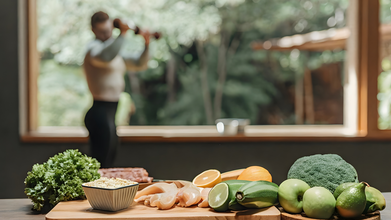
The debate between what is more important or the driving factor behind the rising cases of obesity may be solved now. Thanks to the new research led by over 50 institutions across 19 countries that revealed it is diet, or in simpler words, the calorie consumption and not the lack of physical activity that is a dominant factor driving obesity.
The study is published in the Proceedings of the National Academy of Sciences (PNAS). The study is more so important because it challenges the belief that sedentary lifestyle is the primary cause of driving the obesity rates high.
What Did The Study Find?
The study found that higher calorie intake actually plays a much larger role in obesity than reduced physical activity. Despite decades of research into the causes of the obesity crisis, the relative importance of diet versus physical activity has remained uncertain,” said Herman Pontzer, professor of evolutionary anthropology and global health at Duke University, and one of the study’s authors. “The IAEA’s Doubly Labelled Water Database has allowed us to finally test these ideas on a global scale and bring clarity to this major public health challenge.”
What Is IAEA? Why Does It Matter?
IAEA stands for the International Atomic Energy Agency. The research recently published used IAEA's Doubly Labelled Water (DLW) Database, which is one of the world's largest collections of energy expenditure data. The dataset was able to provide the researchers a look into the balance between energy intake and energy output across the populations and economies.
Is Global Obesity On The Rise?
In 2022, nearly 1 in 8 people worldwide were living with obesity. This is a number that has doubled more in adults and quadrupled among adolescents in the past three decades. Obesity also increases risk of many chronic illnesses and diseases, including diabetes, cardiovascular disease, and also certain cancers.
While industrialized societies see soaring obesity rates, traditional and farming communities experience much lower levels of obesity, a contrast often attributed to more physically demanding lifestyles.
This is where this recent study plays a big role. The study found that this assumption does not fully hold true. Even though physical activity across population, or the energy expenditure, that is the total calories burned daily is not significantly lower in industrialized population, their body size is larger. So, if not the energy output, then what is the reason? The answer lies in the diet.
How Was The Study Conducted?
The researchers analyzed data from 4,213 adults aged 18 to 60, representing 34 populations across six continents. Participants included hunter-gatherers, farmers, and urban dwellers. Using the DLW technique, the researchers measured total energy expenditure (TEE), basal energy expenditure (BEE), and active energy expenditure (AEE).
Although people in industrialized nations had higher total energy expenditures due to their larger body sizes, their activity levels, when adjusted for body size, were only slightly lower than those in traditional societies. This slight difference explained less than 10% of the overall increase in body mass index (BMI) and fat percentage. The main driver was higher calorie intake, often from ultra-processed, high-fat, and high-sugar foods.
Findings: Diet Matters More
“For public health professionals, these findings emphasize that improving diet quality, and reducing consumption of high-calorie, ultra-processed foods, may be far more effective than focusing solely on physical activity,” explained Cornelia Loechl, Head of Nutritional and Health-related Environmental Studies at the IAEA. “It underscores how impactful scientific data can guide better health policies.”
Thomas M. Holland, a physician-scientist at RUSH University in Chicago, who was not involved in the study, added: “This research reminds us that while exercise remains essential for overall health, obesity appears to be more closely tied to what and how much we eat. Economic development offers access to more food, but also increases exposure to obesogenic diets.”
14 Drinks Or More A Week Could Increase You Risk Of Colon Cancer By 25%
Credits: Canva
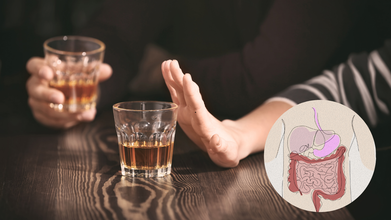
If you drink 14 drinks per week, the American Cancer Society's peer-reviewed journal Cancer, noted that you have a 25% higher risk of developing colorectal cancer. This also means that you have a 95% higher risk of developing rectal cancer as compared to those who drink an average of one drink per week.
Moderate alcohol intake is measured as seven or less drinks per week, which is associated with a lower risk. However, experts have time and again stressed that there is no safe limit of drinking.
"While the data on former drinkers were sparse, we were encouraged to see that their risk may return to that of the light drinkers,” co–senior author Erikka Loftfield of the National Institutes of Health's National Cancer Institute said in a news release.
What the Study Found
The findings come from an analysis of U.S. adults who took part in the National Cancer Institute’s Prostate, Lung, Colorectal and Ovarian Cancer Screening Trial. Researchers tracked 88,092 participants over a 20 year period and identified 1,679 cases of colorectal cancer during that time.
The data showed a clear pattern. Higher lifetime alcohol consumption was linked to a higher risk of colorectal cancer, with the strongest association seen for rectal cancer. However, the study also offered encouraging news. People who stopped drinking saw their risk decline, highlighting that lifestyle changes can still make a difference later in life.
Read: Drinking Alcohol Could Damage Your DNA, Not Just Your Liver Or Heart
Colorectal Cancer Is Rising in Younger Adults
These findings come at a time of growing concern about colorectal cancer rates, especially among younger people. Earlier this month, the American Cancer Society reported that colorectal cancer has become the leading cause of cancer-related deaths among people under 50 in the United States.
Dr. Ahmedin Jemal, senior author of the report and senior vice president of surveillance, prevention and health services research at the American Cancer Society, said the trend is alarming. He noted that the speed at which colorectal cancer rates have risen among younger adults means it can no longer be considered a disease that only affects older people.
Also Read: Diljit Dosanjh Swears By This Green Juice to Power His 4am to 9pm Routine
Changing Guidance on Alcohol Consumption
Federal health guidance around alcohol has also shifted. Instead of specifying how many drinks are considered safe, the latest dietary guidelines advise Americans to drink less overall. People with certain health conditions are encouraged to avoid alcohol entirely.
Christopher Kahler, director of the Center for Alcohol and Addiction Studies at Brown University, has previously explained that no amount of drinking is completely risk-free. According to him, health risks increase with higher consumption, which is why current guidelines focus on reducing intake rather than defining a safe threshold.
What This Means for Individuals
Taken together, the research reinforces a simple message. Heavy drinking raises cancer risk, drinking less is better for health, and stopping alcohol use can help lower the chances of developing colorectal cancer. With rates rising in younger adults, experts say awareness and prevention efforts are more important than ever.
Vitamin D Supplements Under Scrutiny As It Fails Safety Test
Credits: iStock
In many parts of the world, sun is again unseen, thanks to the extended winters. Does this mean you should worry about your vitamin D levels? Yes. However, it does not mean that everyone needs to rush to the nearest pharmacy for supplements.
Health and Me had previously reported on the adverse impact of overdosing on vitamin D supplements. Now, a new study by The Austrian Association for Consumer Information (VKI), and Stiftung Warentest, a German consumer organization tested 22 supplements and found that only two were suitable for preventing a deficiency.
Also Read: NHS Doctors Warn Vitamin D Users About Four Key Overdose Symptoms
Which Vitamin D Supplements Were Tested?
- Abbey Vitamin D3 2500 IU + Zinc + Selenium
- Abtei Vitamin D3 3000 IU
- Alsiroyal Vitamin D3 plant-based + K2 melt-in-the-mouth tablets
- Cefavit D3 1000 IU
- Cefavit D3 K2 Mg 2000
- Dekristolvit D3 2000 IU
- Dekristolvit D3 4000 IU
- dm Mivolis Vitamin D3 1000 IU
- Doppelherz Active Vitamin D3 2000 IU
- Doppelherz System Vitamin D3 7000 IU
- GSE Vitamin D
- GSE Vitamin D3
- Hübner Vitamin D3 800 IU
- Hübner Vitamin D3 Compact 2000 IU
- Natural Elements Vitamin D3/K2 Drops
- Raab Vitalfood D3 + K2 vitamins
- Rotbäckchen Vital Vitamin D
- Sanotact Vitamin D 3200 IU
- Taxofit Vitamin D3 2500 IU
- Tetesept Vitamin D3 10000 weekly depot
- Tetesept Vitamin D3 2000 high dosage
- Vigantolvit Vitamin D3 2000 IU
Of these, only GSE and Rotbäckchen were noted to be safe for use. Markus Herrmann, head of the Institute of Medical and Chemical Laboratory Diagnostics at the Medical University of Graz, said, "Based on the available data, reputable professional societies do not recommend vitamin D supplementation for healthy adults."
VKI found that 20 out of the 22 products tested were overdose. The worst offenders, according to the study were products from: Hübner, Dekristolvit, Alsiroyal, and Sanotact. Their recommended daily dose exceeded that of the GSE product, which is considered effective, by a factor of 20.
What Are The Recommendations On Vitamin D?
VKI generally advises against the use of vitamin D supplements without consulting doctor. However, the belief that vitamin D is essential still persist. Who are at most risk? The answer is: children, elderly, pregnant women, and people who do not get much sun exposure or cover their skin are most likely to be deficient.
Also Read: After NHS Warning On Vitamin D, Turkish Expert Too Warns Of Poisoning
Time Spent Under Sun In Summers Could Get You Through Winters
Vitamin D has unique characters that makes it different from vitamin C, another popular supplements. It is a steroid that acts as a hormone in the body and is one of the fat-soluble vitamin. This means, it could be stored in fat and muscles, that too for a relatively long time, says Herrmann.
People who spent a lot of time outdoors in summers only begin to deplete their vitamin D levels in February, which is almost the end of winters. Even after this, a few hours a week in fresh air and winter sunlight is enough to produce sufficient vitamin D again.
However, experts point out that because vitamin D is stored, this is what makes it difficult to be excreted, especially when the doses are high. It remains in the body and could harm the person.
Diljit Dosanjh Swears By This Green Juice to Power His 4am to 9pm Routine

Credits: Instagram
Diljit Dosanjh posted a reel dated December 11, where he flaunted his workout plan which starts at 4am and his day ends at 9pmDiljit Dosanjh Swears by This Green Juice to Power His 4am to 9am Workout. His secret to a long day is his 'green juice'. In the video itself, the 42-year-old actor and singer shared that he makes a green juice.
What Is Diljit Dosanjh's Green Juice?
He had shared once on his story in 2021 that he mixes neem and amla along with water for his green juice. The juice works best when consumed on an empty stomach. Why does this juice work?
Neem is loaded with benefits, and same is the case with amla. Neem is known for improving cardiovascular health, eyesight, liver health and the overall immune system. Amla on the hand contains nutrients like vitamin A, pyridoxine, riboflavin and minerals like sodium, potassium, carotene, calcium, copper, zinc, phosphorus, manganese, magnesium, and iron. Amla is also known to help with digestion and increase production of red blood cell.
What Are The Benefits Of Amla And Neem?
Amla or Indian gooseberry helps in diabetes control as they have soluble fiber in it and it dissolves quickly in the body. This also helps to slow down the rate at which your body absorbs sugar. Furthermore, it aids with digestion, and the vitamin A content in it helps with eye health. Amla is also rich in vitamin C, which helps in improving immunity and its antibacterial and anti-inflammatory properties helps furthermore with boosting health.
Neem, or scientifically called Azadirachta Indica contains chemicals that could help with diabetes control by reducing blood sugar levels, heal ulcers in the digestive tract, prevent pregnancy, kill bacteria, and prevent plaque from forming in the mouth.
What Does Diljit Dosanjh's Day Look Like?
He wakes up at 4am and his day begins with energy and powerhouse performances. His fitness regime includes a mix of cardio and weight training.
His day starts with cardio which includes:
Climbing Stairs
- Stand at the bottom of the staircase with your back straight.
- Step up with one foot, then bring the other foot up to the same step.
- Continue climbing at a steady pace, using the handrail if needed for balance.
- Walk back down carefully, keeping your steps controlled.
- Repeat for several rounds or for a set time.
Push Ups
- Start in a plank position with your hands placed slightly wider than shoulder-width.
- Keep your body in a straight line from head to heels.
- Bend your elbows and lower your chest toward the floor.
- Push through your palms to straighten your arms and return to the starting position.
- Repeat for the desired number of reps. Beginners can keep their knees on the floor.
Jumping Jacks
- Stand straight with your feet together and arms by your sides.
- Jump up, spreading your legs while raising your arms overhead.
- Jump again to bring your feet back together and arms down.
- Maintain a steady rhythm and breathe normally.
- Continue for a set number of reps or time.
His weight training includes:
Chest flys with dumbbells
- Lie flat on a bench or the floor, holding a dumbbell in each hand.
- Extend your arms above your chest with palms facing each other.
- Keep a slight bend in your elbows throughout the movement.
- Slowly lower your arms out to the sides until you feel a stretch in your chest.
- Bring the dumbbells back together above your chest in a controlled motion.
- Repeat for the desired number of reps.
Dumbbell overhead extensions
- Stand or sit upright, holding one dumbbell with both hands.
- Raise the dumbbell overhead, arms fully extended.
- Keep your elbows close to your ears.
- Slowly bend your elbows to lower the dumbbell behind your head.
- Extend your arms to lift the dumbbell back to the starting position.
- Repeat while keeping your core tight and back straight.
His workout regime ends with light yoga, with cobra pose.
- Follow Us :


© 2024 Bennett, Coleman & Company Limited