
- Health Conditions A-Z
- Health & Wellness
- Nutrition
- Fitness
- Health News
- Ayurveda
- Videos
- Medicine A-Z
- Parenting
This Cheap Alternative to Blueberries Can Help Your Heart
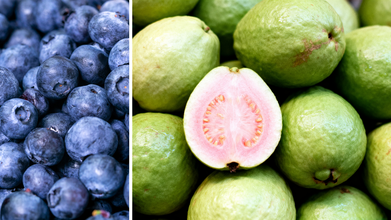
Guavas Better Than Blueberries (Photos: Canva)
Tiny but mighty, eating blueberries not only gives you a sweet taste but also can be extremely beneficial for your entire body.
Extremely rich in antioxidants called anthocyanins, they help with slowing down brain aging. Along with this, the fruit also helps regulates blood pressure and cholesterol levels, overall improving cardiovascular health.
Although they might sound beneficial, they are pricey and inaccessible to a majority of the public.
However, experts have now revealed that guava can provide the body with more benefits than blueberries at half the price.
Why Is Guava Better Than Blueberries?Guavas are living proof that appearances are deceptive. Packed with nearly five times more Vitamin C (about 228mg) and loaded with digestive fibers, this winter fruit is perfectly suited for everyday snacking.
According to Healthline, a single guava can fulfill 12 percent of your recommended daily intake of fiber. A 2025 overview by PubMed also shows that guava leaves have been researched for managing blood sugar levels.
Guavas contain soluble fibers which slow down the digestion and absorption of sugars, preventing sudden spikes in glucose levels. Previous research also shows that regular consumption can help improve insulin sensitivity and lipid profiles, benefiting metabolic health.
With significantly higher Vitamin C content than blueberries, this fruit supports collagen production and gives you brighter skin and protection against premature aging.
Which Other Fruits Are Rich in Antioxidants?
You might not have noticed that some fruits lying unwanted in your fridge might just be hidden gems: jamun, amla and pomegranates are also brimming with antioxidants that can support immunity and overall heart health.While cranberries support urinary tract health by preventing bacterial adhesion and reducing inflammation, strawberries are rich in Vitamin C and folate and help with blood sugar regulation which can help stabilize glucose levels.
After all the environmental damage and aging that you have caused your skin, it deserves the utmost care and protection to rebuild and glow.
While blueberries have been linked to improving skin texture, goji berries are far rich in flavonoids that can neutralize free radicals, boost collagen and protect against UV damage.
Blackberries and raspberries are excellent sources that reduce oxidative stress and inflammation.
Experts recommend incorporating a mix of these fruits in your diet to help repair your DNA, reduce inflammation and prevent chronic conditions.
The 4 Foods You Should Eat To Boost Collagen

Boost Collagen With These Superfoods (Photos: Canva)
Collagen is essential for maintaining firm skin, prevent premature aging and regulates cell proliferation. While it is usually found in animal sources, many fruits and super foods acts rich sources.
Why Does Collagen Fall as You Age?
Collagen production begins to decline in mid 20’s and falls to very low levels when you reach menopause. This occurs due to the nature process of ageing, because of which cells responsible for producing collagen become less active. Factors like sun exposure, smoking and stress can make it worse.Here are natural collagen rich superfoods, you can consume:
Vitamin C Rich Fruits Guava, Amla, and kiwi help stimulate collagen supporting skin repair and hydration.
Strawberries are rich in polyphenols, reducing oxidative stress, while oranges provide hydration and vitamin for rebuilding the skin. These fruits are catalysts essential for youthful and resilient skin.
Meats
Items such as bone broth, stock and chicken are rich in collagen. Fish offers omega 3, Omega reduces inflammation and prevents against chronic diseases. Egg whites contain proline and glycerin crucial amino acids which are organic compounds essential for building proteins and hormones in the body.Leafy Greens and Nuts
Spinach provides magnesium and antioxidants that preserve collagen. Nuts such as cashews and almonds rich in Vitamin E. Furthermore, pumpkin and flax seeds are crucial for maintain collagen stability.Supplements
Collagen is the perfect ingredient for glowing skin and it is all over the internet–coffee, Collagen is added to coffee by mixing peptides which dissolve easily in hot liquid and powders that give comparatively quicker results. Type 1 Collagen is usually considered the best for skin.
14 Drinks Or More A Week Could Increase You Risk Of Colon Cancer By 25%

Credits: Canva
If you drink 14 drinks per week, the American Cancer Society's peer-reviewed journal Cancer, noted that you have a 25% higher risk of developing colorectal cancer. This also means that you have a 95% higher risk of developing rectal cancer as compared to those who drink an average of one drink per week.
Moderate alcohol intake is measured as seven or less drinks per week, which is associated with a lower risk. However, experts have time and again stressed that there is no safe limit of drinking.
"While the data on former drinkers were sparse, we were encouraged to see that their risk may return to that of the light drinkers,” co–senior author Erikka Loftfield of the National Institutes of Health's National Cancer Institute said in a news release.
What the Study Found
The findings come from an analysis of U.S. adults who took part in the National Cancer Institute’s Prostate, Lung, Colorectal and Ovarian Cancer Screening Trial. Researchers tracked 88,092 participants over a 20 year period and identified 1,679 cases of colorectal cancer during that time.
The data showed a clear pattern. Higher lifetime alcohol consumption was linked to a higher risk of colorectal cancer, with the strongest association seen for rectal cancer. However, the study also offered encouraging news. People who stopped drinking saw their risk decline, highlighting that lifestyle changes can still make a difference later in life.
Read: Drinking Alcohol Could Damage Your DNA, Not Just Your Liver Or Heart
Colorectal Cancer Is Rising in Younger Adults
These findings come at a time of growing concern about colorectal cancer rates, especially among younger people. Earlier this month, the American Cancer Society reported that colorectal cancer has become the leading cause of cancer-related deaths among people under 50 in the United States.
Dr. Ahmedin Jemal, senior author of the report and senior vice president of surveillance, prevention and health services research at the American Cancer Society, said the trend is alarming. He noted that the speed at which colorectal cancer rates have risen among younger adults means it can no longer be considered a disease that only affects older people.
Also Read: Diljit Dosanjh Swears By This Green Juice to Power His 4am to 9pm Routine
Changing Guidance on Alcohol Consumption
Federal health guidance around alcohol has also shifted. Instead of specifying how many drinks are considered safe, the latest dietary guidelines advise Americans to drink less overall. People with certain health conditions are encouraged to avoid alcohol entirely.
Christopher Kahler, director of the Center for Alcohol and Addiction Studies at Brown University, has previously explained that no amount of drinking is completely risk-free. According to him, health risks increase with higher consumption, which is why current guidelines focus on reducing intake rather than defining a safe threshold.
What This Means for Individuals
Taken together, the research reinforces a simple message. Heavy drinking raises cancer risk, drinking less is better for health, and stopping alcohol use can help lower the chances of developing colorectal cancer. With rates rising in younger adults, experts say awareness and prevention efforts are more important than ever.
Vitamin D Supplements Under Scrutiny As It Fails Safety Test
Credits: iStock
In many parts of the world, sun is again unseen, thanks to the extended winters. Does this mean you should worry about your vitamin D levels? Yes. However, it does not mean that everyone needs to rush to the nearest pharmacy for supplements.
Health and Me had previously reported on the adverse impact of overdosing on vitamin D supplements. Now, a new study by The Austrian Association for Consumer Information (VKI), and Stiftung Warentest, a German consumer organization tested 22 supplements and found that only two were suitable for preventing a deficiency.
Also Read: NHS Doctors Warn Vitamin D Users About Four Key Overdose Symptoms
Which Vitamin D Supplements Were Tested?
- Abbey Vitamin D3 2500 IU + Zinc + Selenium
- Abtei Vitamin D3 3000 IU
- Alsiroyal Vitamin D3 plant-based + K2 melt-in-the-mouth tablets
- Cefavit D3 1000 IU
- Cefavit D3 K2 Mg 2000
- Dekristolvit D3 2000 IU
- Dekristolvit D3 4000 IU
- dm Mivolis Vitamin D3 1000 IU
- Doppelherz Active Vitamin D3 2000 IU
- Doppelherz System Vitamin D3 7000 IU
- GSE Vitamin D
- GSE Vitamin D3
- Hübner Vitamin D3 800 IU
- Hübner Vitamin D3 Compact 2000 IU
- Natural Elements Vitamin D3/K2 Drops
- Raab Vitalfood D3 + K2 vitamins
- Rotbäckchen Vital Vitamin D
- Sanotact Vitamin D 3200 IU
- Taxofit Vitamin D3 2500 IU
- Tetesept Vitamin D3 10000 weekly depot
- Tetesept Vitamin D3 2000 high dosage
- Vigantolvit Vitamin D3 2000 IU
Of these, only GSE and Rotbäckchen were noted to be safe for use. Markus Herrmann, head of the Institute of Medical and Chemical Laboratory Diagnostics at the Medical University of Graz, said, "Based on the available data, reputable professional societies do not recommend vitamin D supplementation for healthy adults."
VKI found that 20 out of the 22 products tested were overdose. The worst offenders, according to the study were products from: Hübner, Dekristolvit, Alsiroyal, and Sanotact. Their recommended daily dose exceeded that of the GSE product, which is considered effective, by a factor of 20.
What Are The Recommendations On Vitamin D?
VKI generally advises against the use of vitamin D supplements without consulting doctor. However, the belief that vitamin D is essential still persist. Who are at most risk? The answer is: children, elderly, pregnant women, and people who do not get much sun exposure or cover their skin are most likely to be deficient.
Also Read: After NHS Warning On Vitamin D, Turkish Expert Too Warns Of Poisoning
Time Spent Under Sun In Summers Could Get You Through Winters
Vitamin D has unique characters that makes it different from vitamin C, another popular supplements. It is a steroid that acts as a hormone in the body and is one of the fat-soluble vitamin. This means, it could be stored in fat and muscles, that too for a relatively long time, says Herrmann.
People who spent a lot of time outdoors in summers only begin to deplete their vitamin D levels in February, which is almost the end of winters. Even after this, a few hours a week in fresh air and winter sunlight is enough to produce sufficient vitamin D again.
However, experts point out that because vitamin D is stored, this is what makes it difficult to be excreted, especially when the doses are high. It remains in the body and could harm the person.
- Follow Us :


© 2024 Bennett, Coleman & Company Limited