
- Health Conditions A-Z
- Health & Wellness
- Nutrition
- Fitness
- Health News
- Ayurveda
- Videos
- Bizz Impact
- Medicine A-Z
- Parenting
Unvaccinated Traveler Triggers Measles Outbreak in US, 17 Infected: CDC
Credit: Canva
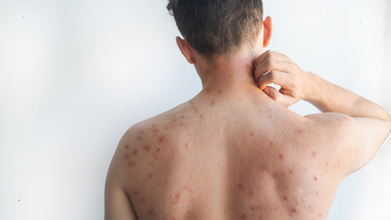
The US Centers for Disease Control and Prevention (CDC) has stated that an unvaccinated person who traveled to the US from Europe spread measles to 17 others in the country last year.
In a paper published in The Journal of Infectious Diseases, the CDC highlighted the case of an unvaccinated traveler who arrived at the Denver International Airport in Colorado in May 2025.
The person traveled with a fever, persistent cough, cold-like symptoms, and conjunctivitis (“pink eye”). He stayed overnight in a hotel and then boarded another flight to North Dakota. A day later, the person developed a rash.
“The index case was in an unvaccinated adult. Aircraft contact investigations identified 135 exposed domestic travelers. Fifteen secondary cases were identified among people exposed during the international (5) and domestic (3) flights, and at the airport (7),” the CDC said in the paper.
“Two tertiary case-patients were also identified. Five of the secondary case-patients had at least one documented prior measles vaccination,” it added.
The 2025 US Measles Outbreak
While measles was declared eliminated in the US in 2000, and sporadic outbreaks were controlled quickly, falling vaccination rates, especially during the COVID-19 pandemic, raise the risk of larger, harder-to-contain outbreaks.
This was further compounded by the anti-vaccine stance of President Donald Trump and his Health Secretary Robert F Kennedy Jr.
As per the CDC, a total of 2,281 confirmed measles cases were reported in the US in 2025. In 2026, the agency reported 10 new outbreaks, with more than 1,000 measles cases confirmed to date. More than 90 percent cases each year occurred in the unvaccinated.
Air Travel Increases Measles Spread
Recently, two passengers from India infected with measles landed in Auckland, New Zealand, via Singapore Airlines.
The Straits Times quoted Associate Professor Lim Poh Lian, group director of the Communicable Disease Agency’s (CDA) Communicable Disease Program, who noted that the individuals developed symptoms only while onboard the flight from Singapore to Auckland.
“Measles transmission may occur during travel. Travelers with fever and other overt signs of transmissible illness, such as coughing or malaise, should be strongly encouraged to delay travel while symptomatic,” the US CDC said.
Vaccination Key To Tackling Measles
Measles is a highly infectious disease characterized by the three Cs:
- Cough
- Coryza or runny nose
- Conjunctivitis or red and watery eyes
It easily spreads from one infected person to another through breaths, coughs, or sneezes and could cause severe disease, complications, and even death.
Even though a safe and cost-effective vaccine is available, in 2024, there were an estimated 95,000 measles deaths globally, mostly among unvaccinated or under-vaccinated children under the age of 5 years, according to the World Health Organization (WHO).
The CDC recommends that all travelers aged 6 months or older get vaccinated before international travel.
Bladder Cancer Detection May Get Faster & Easier: New Urine Test Detects 92% Of Cases
Credit: AI
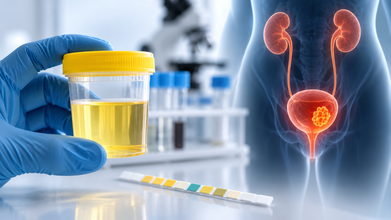
Bladder cancer detection could get easier, faster and much less invasive as a new urine test can help identify it. According to new UK research, patients may not have to wait for an invasive bladder examination just to get their cancer diagnosis.
The test, called GALEAS Bladder, detected almost 92.2% of bladder cancers in a study involving 964 patients across seven NHS urology departments. The findings were published in European Urology Oncology recently .
How Does The Urine Test Work?
In the study, patients had been referred for urgent investigation because of haematuria, or blood in the urine, one of the key warning signs of bladder cancer. Their urine samples were tested alongside the standard diagnostic method, which included cystoscopy.
Among the 964 patients who had a final diagnosis, 77 were found to have bladder cancer. The urine test detected 71 of those 77 cancers, making the success rate almost 92%.
It detected all 17 muscle-invasive bladder cancers identified in the study. It also picked up 35 of 36 high-grade cancers, equivalent to 97.2%.
Also read: PM2.5 and Cancer Risk: Practical Ways to Protect Yourself in India’s Polluted Cities
Could It Reduce The Requirement For Cystoscopy?
Cystoscopy remains an important part of bladder cancer diagnosis. The procedure involves passing a camera through the urethra into the bladder, so doctors can directly examine the organ.
While effective, cystoscopy is invasive and requires hospital resources. The researchers believe a urine-based test could help doctors decide which patients need an urgent cystoscopy and which patients may be able to safely defer the procedure.
According to this study, a negative GALEAS result was linked with a 99.3% likelihood of not having bladder cancer. Researchers estimated that using the test to triage patients could reduce urgent cystoscopies by about 730 per 1,000 patients, without reducing overall clinical benefit.
Professor Richard Bryan, Director of the University of Birmingham’s Bladder Cancer Research Centre and a study co-author, said the findings show that molecular urine testing can help clinicians determine which patients need urgent cystoscopy.
The test performed particularly well in patients whose blood in the urine was not visible to the naked eye. In this group, which represented about 30% of participants, the test identified all bladder cancers diagnosed in the study.
Also read: Have Dense Breasts? What Women Should Know About Their Breast Cancer Risk
Is The Urine Test A Replacement For Cystoscopy?
The researchers describe GALEAS as a tool to support decision-making before cystoscopy, rather than a complete replacement for diagnostic procedures. A positive result can help prioritise patients for cystoscopy, while a negative result may allow immediate cystoscopy to be deferred in appropriate cases.
The study does not mean that a person with symptoms can simply take a urine test and rule out cancer on their own. A suspected bladder cancer diagnosis still requires appropriate clinical assessment.
In the study, just 8% of participants were diagnosed with bladder cancer. The findings offer a useful way to make bladder cancer investigations more targeted, particularly where large numbers of people are referred for blood in the urine, but only a small proportion ultimately get diagnosed cancer.
Abhayrab Rabies Vaccine Batch Found Misbranded, ‘Not Of Standard Quality’: DCGI Alerts States
Credit: Instagram
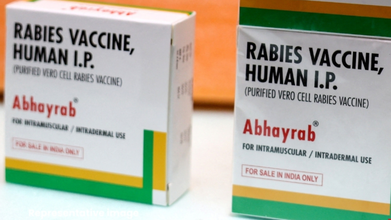
India’s drug regulator has flagged a batch of Abhayrab, a widely used rabies vaccine, as “Not of Standard Quality” and misbranded after vaccine samples seized from an unlicensed premises in Delhi failed to meet potency test.
The development has raised concerns that the vials could be counterfeit, because the vaccine manufacturer, Indian Immunologicals Ltd (IIL), says the samples tested by authorities were not manufactured by the company.
Fake Batch Of Abhayrab Seized
The vaccine samples, carrying batch number KE25012, were seized on April 22 from an unlicensed residential premises in Mukherjee Nagar, Delhi, during an enforcement operation by the Delhi Crime Branch and Drugs Control Department.
CDSCO officials carried out legal sampling, and the samples were sent to the Central Drugs Laboratory (CDL), Kasauli, for testing. CDL subsequently classified the product as “misbranded” and “Not of Standard Quality.”
The laboratory report found that the sample failed the potency requirement, although it passed tests for sterility, moisture, thermostability and identity. It also identified 17 differences between the seized product and the genuine retention sample of the same batch, including differences in labelling, artwork, QR-code verification, cap colour, licence details and packaging text.
Manufacturer Says Seized Samples Were Counterfeit
IIL has denied manufacturing the vials that were seized in Delhi. In a statement released on September 4, the company said the laboratory had found 17 differences between the seized vials and its genuine retention samples.
“On that basis, the vials examined are not a product manufactured by Human Biologicals Institute,” the company said.
The company also said the genuine batch had been independently tested and released by CDL, Kasauli, with 83,370 vials supplied through its authorised distribution channel. It said no market complaint had been received for batch KE25012.
Also read: Bat Encounter While Sleeping: Why You Shouldn’t Ignore The Risk Of Rabies
Government's Action
The Drugs Controller General of India (DCGI) has asked state drug regulators to closely monitor the movement and distribution of batch KE25012.
In its August 27 statement , the DCGI directed officials to maintain “strict vigilance” over the batch and take regulatory action where necessary.
A government notice issued on September 5 said the action was part of ongoing efforts to detect “unauthorized manufacturing and distribution activities and prevent the circulation of misbranded and spurious medicines.”
Four people have been arrested by Delhi Police in connection with the case, while further investigation is underway. The government has also confirmed that no part of the concerned batch was exported to another country.
What Does This Mean For People Who Took Abhayrab?
The current alert concerns vials seized from an unlicensed premises, which the manufacturer says were not its genuine product.
IIL has said vaccines administered through hospitals, clinics, government healthcare facilities and licensed pharmacies reach patients through the authorised supply chain and are not affected by this matter.
As of now, authorities are tracing the source of the seized vials and investigating how products bearing the Abhayrab name and batch number entered an unauthorised supply chain.
Patients who suspect exposure must not to stop or delay rabies vaccination because of the alert. Anyone who has suffered a potentially rabid animal bite or exposure should seek medical care promptly and use vaccines obtained through authorised healthcare sources.
Serum Institute-Led Monoclonal Antibody Clears Dengue Viremia, Fever Within A Day In Phase 2 Trial

Credit: iStock
Even as dengue continues to wreak havoc globally, with more than 7.37 million cases reported worldwide so far in 2026, an experimental monoclonal antibody (mAb) has shown promise as a potential treatment in a Phase 2 trial.
Led by Pune-based Serum Institute of India, the trial found that Dengue-mAb cleared dengue viremia and fever within 24 hours, offering early evidence of a potential therapeutic effect against the virus.
“This first-in-patient phase 2 randomized clinical trial demonstrated the safety of Dengue-mAb and its action on the clearance of dengue virus and fever,” the researchers, including those from Serum, said. “This is, to our knowledge, the first evidence of a preliminary therapeutic effect in patients with dengue.”
What Did The Trial Find?
Detailed in JAMA Network Open, the researchers found that the experimental Dengue-mAb was safe and well-tolerated and showed evidence of a therapeutic effect.
Dengue-mAb is a human-engineered, recombinant monoclonal antibody that neutralized all four dengue virus serotypes in animal studies and demonstrated safety in a Phase 1 trial in healthy adults.
Also read: Dengue, Chikungunya, Zika-Carrying Mosquito Breeding In UK: Are You At Risk?
The findings were based on a randomized, placebo-controlled trial involving 250 adults with dengue and a history of fever onset within 48 hours. Participants received one of four doses of Dengue-mAb — 3, 5, 7, or 9 milligrams per kilogram (mg/kg) — or a placebo, with 50 participants assigned to each group.
The primary outcomes were reduction in viremia at 24 hours and causally related serious adverse events (SAEs).
The antibody showed rapid activity against dengue virus and fever at all four dose levels tested.
Among participants who had detectable viremia at baseline, those treated with the 5- to 9-mg/kg doses became negative for dengue virus by eight hours, compared with 72 hours with placebo.
At 24 hours, fever clearance ranged from 92.9% to 100% in the Dengue-mAb groups, compared with 58.3% in the placebo group.
Why Does This Matter?
Read More: Dengue Is Spreading Beyond Monsoons And Into New Regions Across India, Says Expert
Dengue affects more than 200 million people each year, mainly in tropical and subtropical regions, and is expanding into new areas amid climate change and rapid urbanisation. The incidence of severe disease is also rising, increasing the need for effective treatments.
The result matters because there is currently no licensed antiviral drug for dengue anywhere in the world. Three vaccines are licensed, but people who develop dengue today generally receive supportive care, including fluids, fever control and monitoring, rather than a treatment that acts directly on the virus.
Dengue-mAb targets the virus, not just the symptoms. The rapid reduction in viremia raises the possibility of a treatment that could change how dengue is managed. However, whether the antibody can prevent severe dengue, hospitalization or deaths is not yet known.
Much of the dengue burden falls on health systems that may struggle to deliver an infused biologic to outpatients within 48 hours of fever onset.
What Happens Next?
The finding is still early. Phase 2 trials assess whether a drug produces a measurable effect in a relatively modest number of patients. They are not the studies regulators use to approve a medicine, and this candidate remains years away from becoming widely available.
Dengue Cases Worldwide And In India
According to WHO global surveillance data, more than 7.37 million dengue cases have been reported worldwide, including about 2.83 million confirmed cases and more than 5,100 deaths. India has reported more than 33,000 cases and over 40 deaths.
- Follow Us :


© $2026 Times Horizon Private Limited